By Max Guerra
Tucked away behind the main collection rooms at the Downtown Santa Cruz Library Branch, decades of local history have long been stored in rows of boxes and rolls of microfilm. But now, with the efforts of library staff and volunteers, Santa Cruz’s history is escaping the filing cabinet becoming easily accessible to all.
The Santa Cruz library is working to digitize hard-copy materials, converting physical clipping files and special collections into searchable digital assets. Victor Willis, a Librarian who oversees the archiving project, says the intention is to broaden access to local stories of the past.
“It’s a record of our history, and we’re getting fresh eyes on it—the way people described things, how language use has changed over time, whose stories are told, and whose stories don’t get told,” said Willis
The archives are open to anyone, and people come in with broad ranges of requests and personal projects. Local historians, families interested in their genealogy, homeowners looking into the story of their residence and local authors are regularly making fascinating use of the archives.
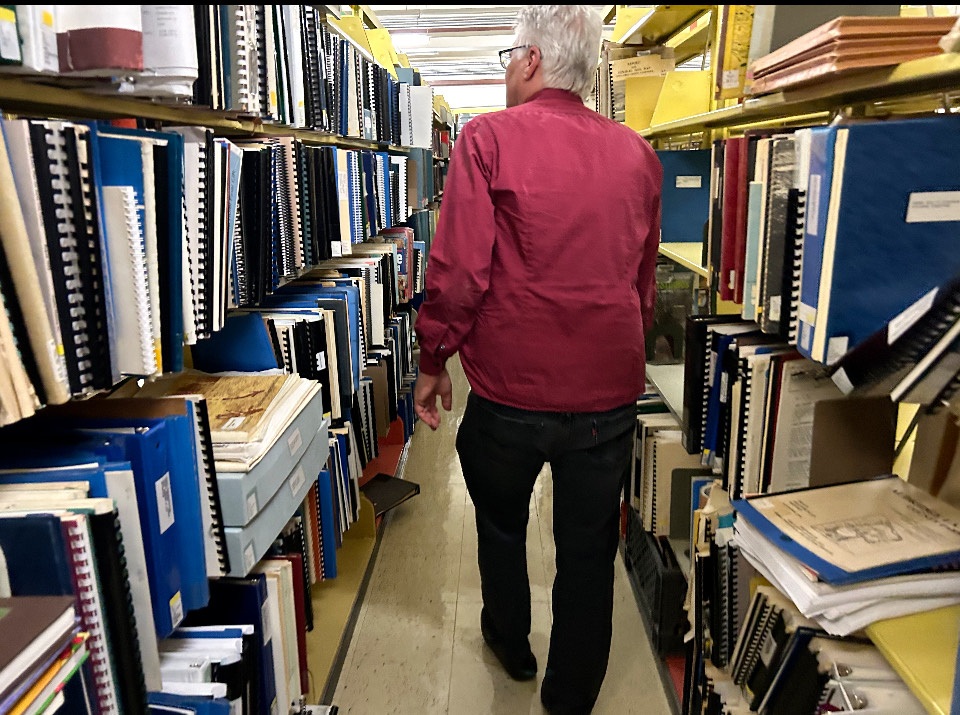
Victor Willis, librarian and information specialist for Santa Cruz Public Libraries, among the archives.
The scale of the project is massive, spanning cabinets filled with news clippings, photographs, rare scrapbooks, and local artifacts. The core clipping archive captures roughly 60 years of Santa Cruz life — from 1960 through 2020 — categorized topically across subjects ranging from UC Santa Cruz developments and Coastal Commission decisions to regional environmental policies.
One exceptionally exciting use for the archives is that it preserves storied local independent print media, including the Lavender Reader (an LGBTQ Quarterly from the 80s), Doula (a magazine for mothers), Definitely Biased, and feminist publications like The Matrix. The team is also processing major historical troves, such as 19th-century scrapbooks kept by Natural History Museum founder Laura Heacock, 1880s pioneer memoirs, and extensive San Lorenzo Valley historical records collected by Faye Ellis.
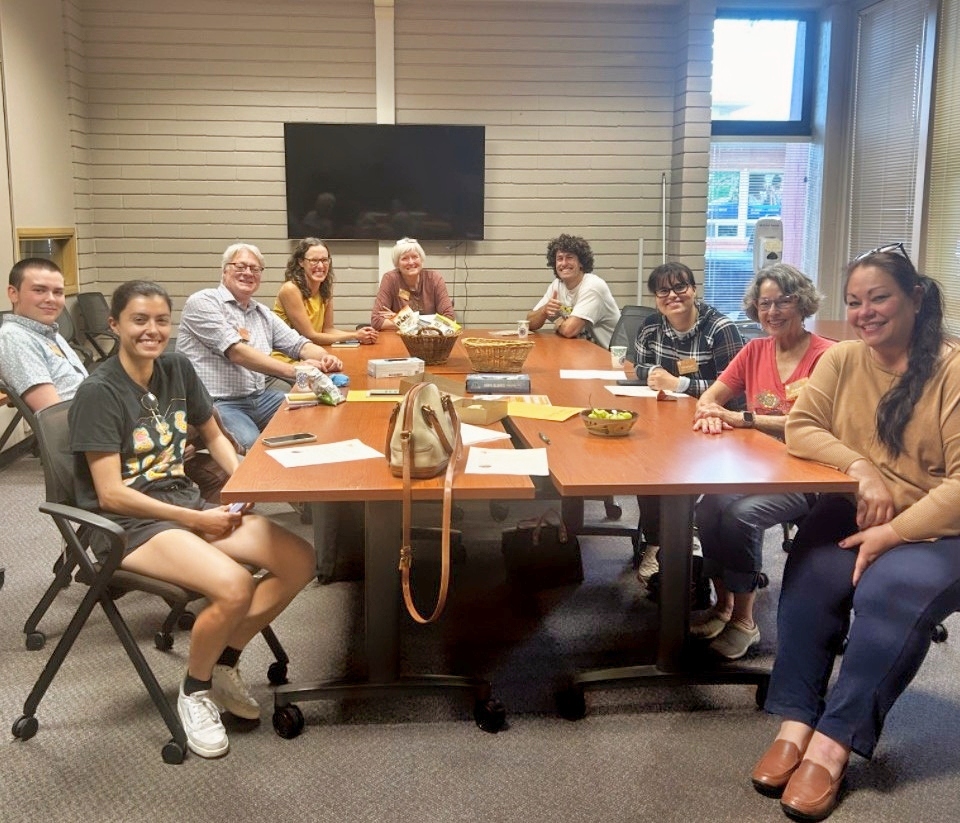
To keep the momentum organized, volunteer project manager Elise Demspey — a retired nurse with a background in database management — helped establish three structured workstreams: special collections, news clippings, and zines. Across two years, over 25 volunteers have learned practical skills in scanning, abstracting, and writing descriptive metadata to ensure each item is searchable online. These skills, Dempsey said, have the additional benefit of preparing volunteers for a whole host of future careers.
“At the heart of the matter, they all think history is really cool,” Dempsey shared. “It’s really a pleasure for me when I have a 20-something say, ‘I never knew this happened in Santa Cruz.'”
The project offers the opportunity to anyone with time to volunteer to become a “community archivist,” someone who is deeply and intimately involved in the preservation of their own local history. Staff and volunteers alike share in the mission of ensuring that an accurate record of the county’s diverse and complex past remains open to all.
“It’s very grassroots,” Dempsey said. “People feel like they have their voice telling their history. It’s more inclusive, and it’s a better history, because history is not one person’s perspective. It’s many.”
Max Guerra lives in Santa Cruz County and writes for the Friends. He currently serves as Co-Editor-in-Chief of City on a Hill Press, the student-run newspaper at UCSC.